
What Is The Best Commercial Floor Scrubber? Expert Guide & Top Picks
Finding the best commercial floor scrubber depends on your facility size, floor type, and cleaning needs. The top commercial floor scrubbers combine powerful cleaning performance, durability, and ease of use, with leading models offering battery life of 3-5 hours and cleaning widths from 20 to 40 inches.
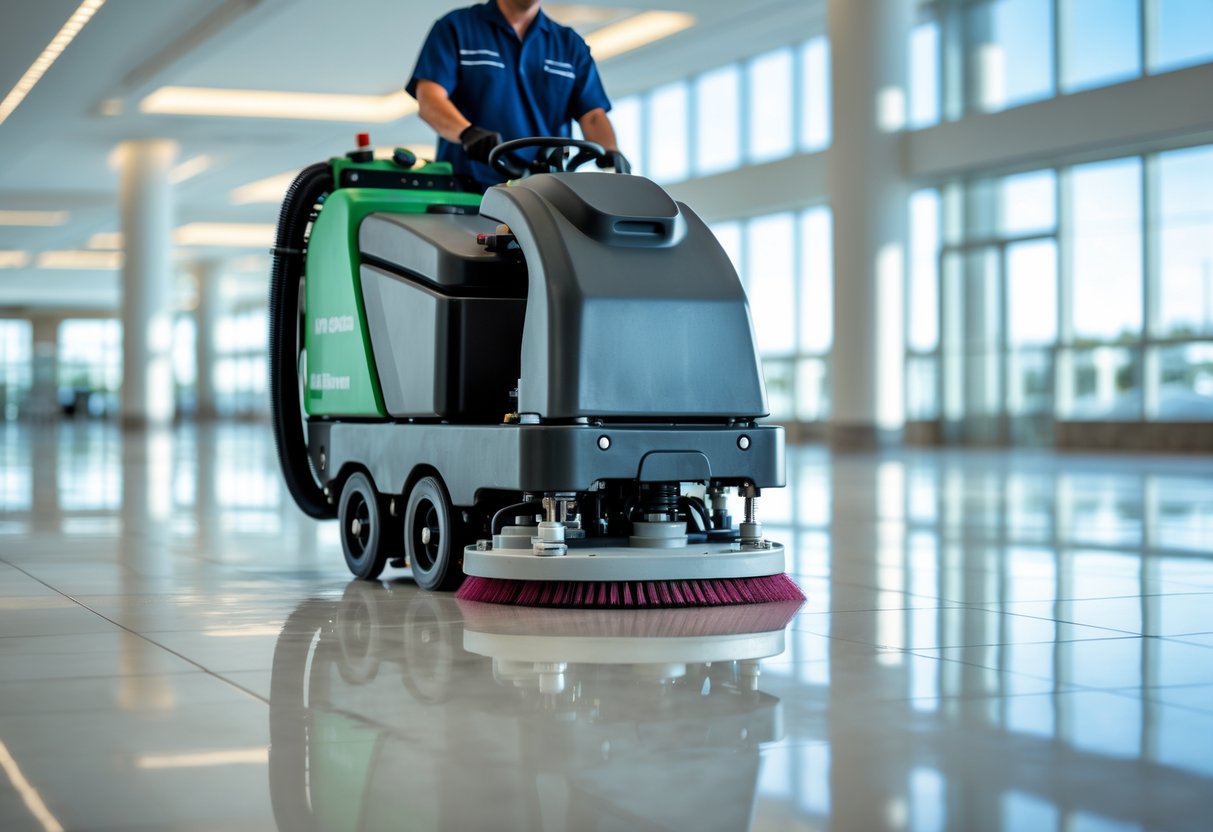
Commercial facilities face unique cleaning challenges that require professional-grade equipment. Traditional mops and basic cleaning methods often fall short when dealing with large areas like warehouses, schools, and retail spaces.
Professional cleaning robots are even emerging as advanced solutions for maintaining extensive public areas. The right floor scrubber can transform cleaning operations by reducing labor costs and improving results.
Modern commercial scrubbers offer features like adjustable brush pressure, multiple cleaning modes, and ergonomic designs that minimize operator fatigue. Understanding the key differences between walk-behind, ride-on, and robotic models helps facility managers make informed decisions that match their specific requirements.
Key Takeaways
- Commercial floor scrubbers should match facility size with walk-behind models for smaller spaces and ride-on units for large areas
- Essential features include adequate battery life, appropriate cleaning width, and adjustable brush pressure for different floor types
- Leading brands offer models with 3-5 hour battery life and cleaning widths ranging from 20 to 40 inches for optimal efficiency
What Defines the Best Commercial Floor Scrubber?
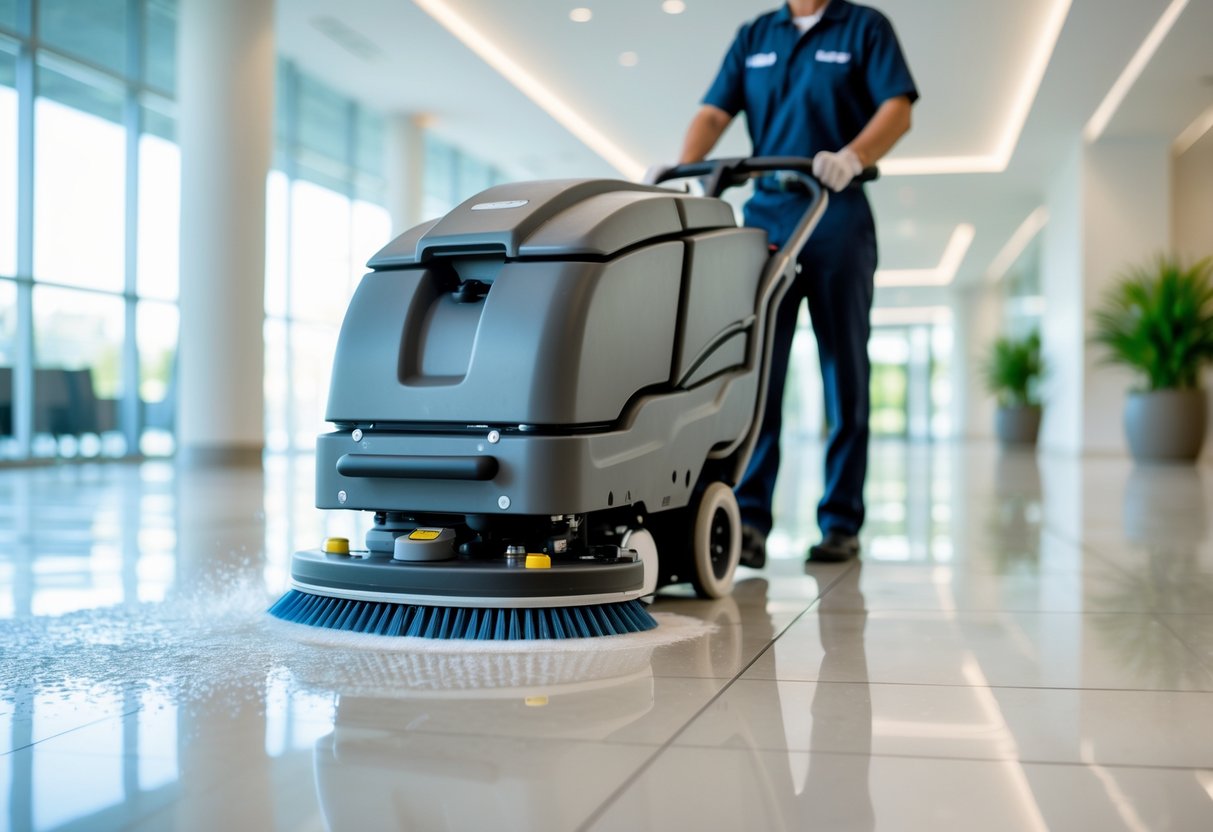
The best commercial floor scrubber delivers superior cleaning performance across different floor types while maximizing efficiency in busy commercial environments. These machines combine powerful scrubbing action with reliable operation to handle demanding cleaning tasks.
Core Functions and Cleaning Performance
Commercial floor scrubbers use rotating brushes or pads to scrub floors while simultaneously applying cleaning solution and extracting dirty water. This three-step process removes embedded dirt and grime that mopping cannot reach.
Brush System Performance:
- Cylindrical brushes work best on textured surfaces like concrete
- Disk brushes excel on smooth floors such as vinyl and tile
- Brush pressure adjustability prevents floor damage
The cleaning efficiency depends on several key factors. Solution flow rate controls how much cleaning chemical reaches the floor.
Higher flow rates improve deep cleaning but increase chemical costs. Critical Performance Metrics:
- Solution tank capacity (10-50 gallons typical)
- Recovery tank capacity (slightly larger than solution tank)
- Scrubbing width (14-40 inches common)
- Cleaning speed (up to 40,000 square feet per hour)
Water recovery systems remove dirty solution completely. Poor recovery leaves floors wet and creates slip hazards.
The squeegee assembly must maintain proper contact with all floor types.
Key Benefits for Commercial Spaces
Commercial floor scrubbers reduce labor costs significantly compared to traditional mopping. One operator can clean large areas quickly while achieving better results.
Time Savings:
- Clean 5-10 times faster than mop and bucket
- Reduce drying time with effective water recovery
- Eliminate multiple passes over heavily soiled areas
Floor scrubbers improve cleaning performance on various commercial surfaces. They remove scuff marks, grease, and ground-in dirt that manual cleaning misses.
This maintains professional appearance in high-traffic areas. Health and Safety Benefits:
- Reduce slip hazards from wet floors
- Minimize chemical exposure for cleaning staff
- Remove allergens and bacteria more effectively
The machines handle different floor types without damage. Pressure controls and brush selection protect delicate surfaces while providing aggressive cleaning on durable floors.
This versatility makes them essential for facilities with multiple flooring materials. Regular use extends floor life by preventing dirt buildup that causes permanent staining and wear patterns.
Types of Commercial Floor Scrubbers
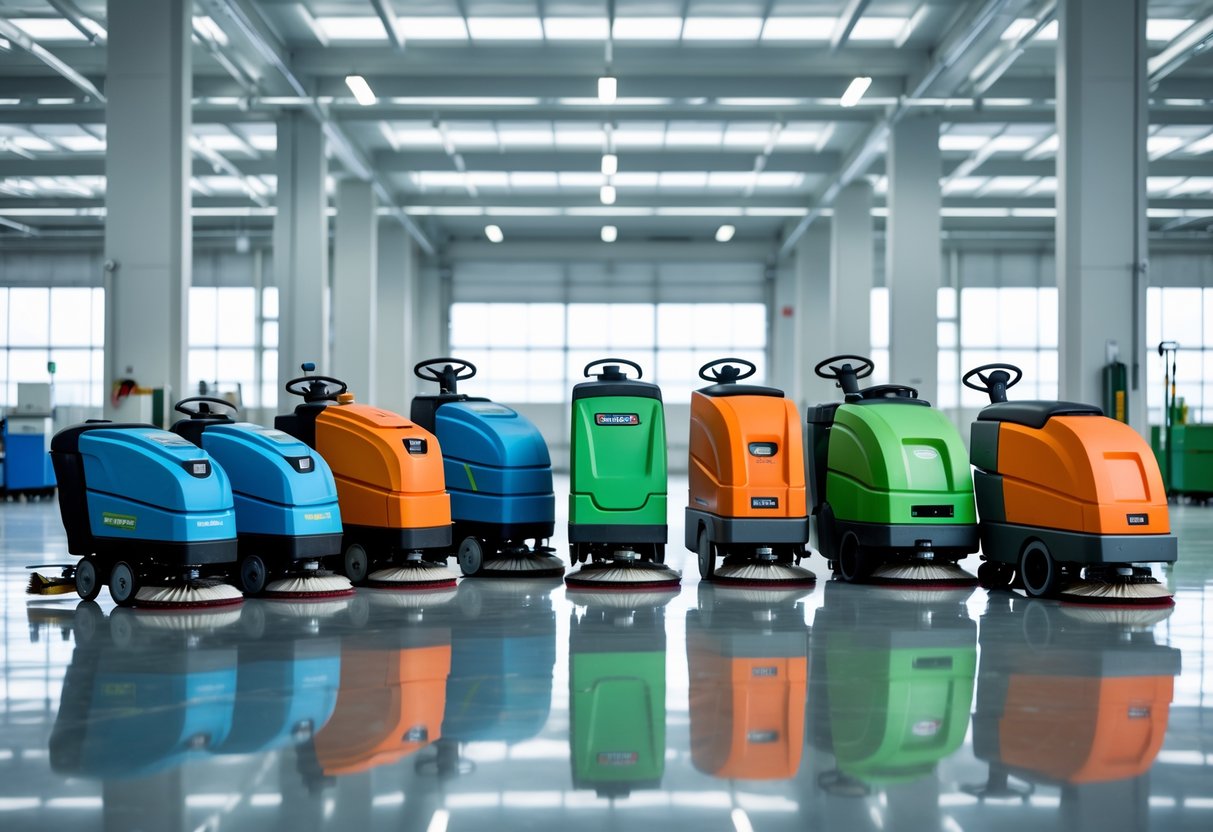
Commercial floor scrubbers come in several distinct categories, each designed for specific cleaning needs and facility sizes. Walk-behind models offer precise control for smaller areas, while ride-on units provide efficiency for large spaces, with both available in battery-powered configurations alongside specialized multifunctional designs.
Walk-Behind Floor Scrubbers
Walk-behind scrubbers are compact cleaning machines that operators control from behind while walking. These units typically range from 13 to 32 inches in cleaning width.
Key Features:
- Manual steering and speed control
- Solution tanks from 3 to 17 gallons
- Cleaning speeds of 1.5 to 3 mph
- Weight ranges from 150 to 400 pounds
Walk-behind floor scrubbers excel in tight spaces like restrooms, kitchens, and narrow hallways. They offer precise maneuvering around obstacles and furniture.
These machines work well for facilities up to 20,000 square feet. Many models feature removable tanks for easy filling and emptying.
Walk-behind floor scrubbers typically cost less than ride-on models. They require minimal storage space and are easy to transport between floors.
Ride-On Floor Scrubbers
Ride-on scrubbers allow operators to sit or stand on the machine while cleaning. These units feature cleaning widths from 20 to 40 inches or more.
Specifications:
- Solution tanks: 14 to 60+ gallons
- Cleaning speeds: 3 to 6 mph
- Operating time: 2 to 8 hours per charge
- Turning radius: varies by model design
Ride-on floor scrubbers reduce operator fatigue during extended cleaning sessions. They clean large areas faster than walk-behind units.
These machines suit facilities over 20,000 square feet. Warehouses, retail stores, and hospitals commonly use ride-on scrubbers.
Most ride-on scrubbers include features like automatic solution mixing and pad pressure adjustment. Some models offer cylindrical brush systems for deep cleaning.
Battery-Powered and Electric Models
Battery-powered scrubbers use rechargeable lead-acid, AGM, or lithium-ion batteries. These units eliminate the need for power cords during operation.
Battery Types:
| Battery Type | Run Time | Charge Time | Lifespan |
|---|---|---|---|
| Lead-Acid | 2-4 hours | 8-12 hours | 2-3 years |
| AGM | 3-5 hours | 6-8 hours | 3-4 years |
| Lithium-Ion | 4-6 hours | 2-4 hours | 5-7 years |
Battery-powered scrubbers offer unlimited mobility without cord management. They work well in areas without convenient electrical outlets.
Electric corded models provide consistent power but limit mobility. These units work best for smaller areas with accessible power sources.
Most commercial facilities choose battery-powered scrubbers for their flexibility. Proper battery maintenance extends equipment life and performance.
Specialized and Multifunctional Floor Scrubbers
Industrial floor scrubbers handle heavy-duty cleaning in manufacturing and warehouse environments. These robust machines feature reinforced components and larger solution capacities.
Some models combine scrubbing with sweeping functions. These units collect debris while simultaneously scrubbing floors.
Specialized Features:
- Chemical-resistant tanks for harsh cleaning solutions
- Heavy-duty squeegees for industrial liquids
- Reinforced frames for continuous operation
- Specialized brush systems for textured surfaces
Certain scrubbers include vacuum recovery systems for spill cleanup. Others feature steam cleaning capabilities for sanitization requirements.
Multifunctional units reduce equipment costs by combining multiple cleaning tasks. They work efficiently in facilities requiring diverse floor cleaning methods.
These specialized machines often require specific training for safe operation. Proper maintenance becomes critical due to their complex systems and heavy usage.
Key Features to Look For
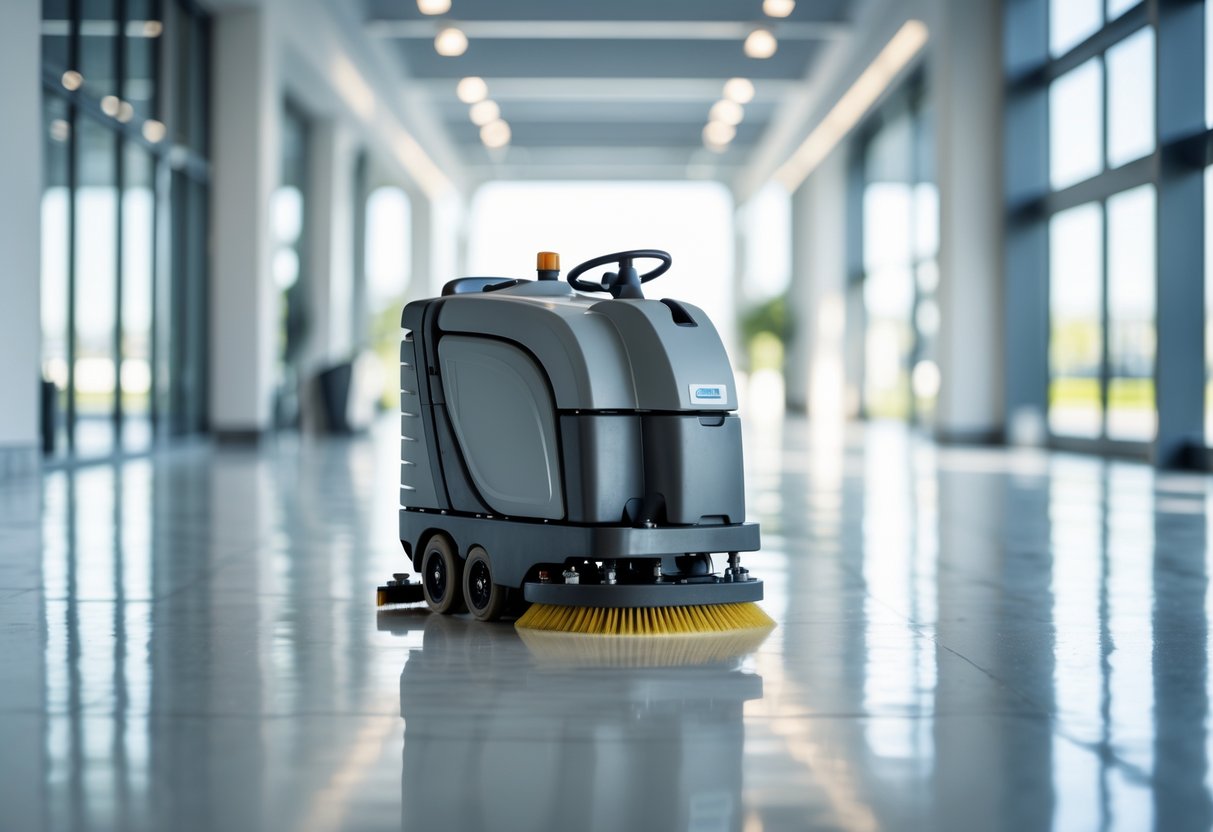
The right commercial floor scrubber depends on several critical specifications that directly impact cleaning performance and operational efficiency. Tank capacity, cleaning path width, motor power, and maneuverability determine how well a machine handles daily cleaning tasks.
Cleaning Path Width and Scrubbing Width
Cleaning path width determines how much floor area the machine covers in a single pass. Most commercial scrubbers range from 17 inches to 40 inches wide.
Smaller facilities work well with 17-20 inch cleaning paths. These machines fit through doorways and navigate tight spaces easily.
Medium-sized areas benefit from 24-28 inch scrubbing width. This size balances coverage with maneuverability for most commercial spaces.
Large warehouses and retail stores need 32-40 inch cleaning paths. Wide paths reduce cleaning time significantly in open areas.
The scrubbing width must match the recovery system width. Mismatched widths leave water streaks or require multiple passes over the same area.
Maneuverability and Ease of Use
Ease of use features reduce operator fatigue and training time. Simple controls help staff learn the machine quickly.
Tight turning radius allows operators to clean around obstacles efficiently. Look for machines that turn within their own footprint.
Adjustable handle height accommodates different operator sizes. This prevents back strain during extended cleaning sessions.
Clear sight lines to the floor help operators see cleaning progress. Operators can spot missed areas or obstacles ahead.
Easy-access components simplify maintenance tasks. Quick-release tanks and tool-free brush changes save time daily.
Tank Capacity and Dual-Tank Systems
Tank capacity determines how long operators can clean before stopping for refills. Larger tanks reduce interruptions but add machine weight.
Recovery tanks collect dirty water during cleaning. The recovery tank should hold slightly more than the solution tank capacity.
Dual-tank systems keep clean and dirty water separate. This prevents recontaminating floors with dirty water during cleaning.
Small machines typically hold 3-7 gallons per tank. These work well for offices and small retail spaces.
Medium scrubbers range from 8-15 gallons. This capacity suits most commercial applications without excessive weight.
Large machines hold 20+ gallons per tank. These serve warehouses and manufacturing facilities with extensive floor areas.
Brush Pressure, Pad Pressure, and Motor Power
Brush pressure affects how well the machine removes stubborn dirt and stains. Adjustable pressure settings handle different floor types and soil levels.
Light pressure works for daily maintenance cleaning. Heavy pressure removes built-up grime but may damage delicate floors.
Pad pressure distributes weight evenly across cleaning pads. Proper pressure ensures consistent cleaning without premature pad wear.
Motor power drives both the brush system and vacuum system. Higher power handles tougher cleaning jobs but increases energy consumption.
Vacuum motors typically range from 1-3 horsepower. Stronger vacuum systems pick up more water, leaving floors drier.
Brush motors should provide consistent speed under load. Variable speed controls let operators adjust for different cleaning needs.
Top Commercial Floor Scrubber Brands and Models
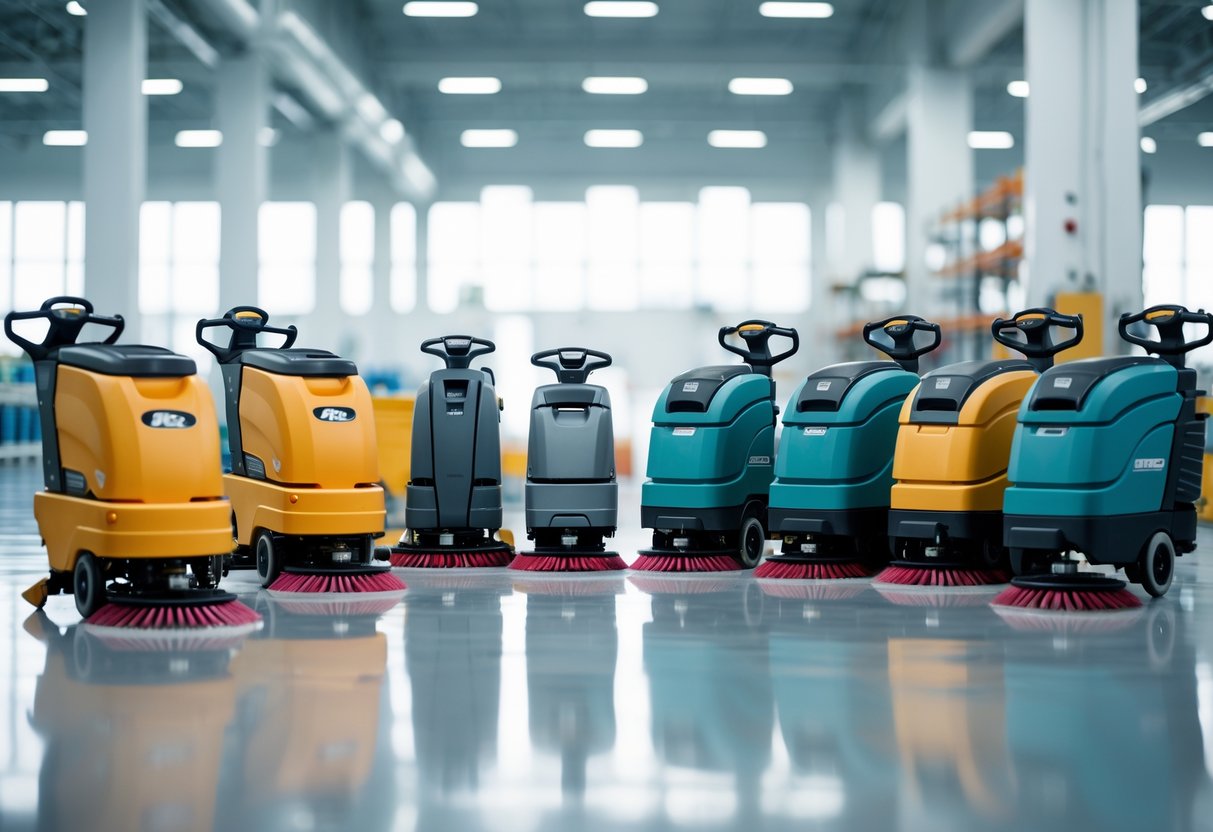
Several established floor scrubber brands dominate the commercial cleaning market with proven track records. These manufacturers offer machines ranging from compact single-pad units to large ride-on systems designed for different facility sizes and cleaning requirements.
Oreck Commercial Orbiter Hard Floor Cleaner
The Oreck Commercial Orbiter stands out as a versatile single-pad cleaning system. This machine weighs 35 pounds and operates at 0.33 horsepower with a 13-inch cleaning path.
The Oreck Commercial Orbiter hard floor cleaner uses orbital motion rather than rotary action. This design allows the machine to move in random patterns, preventing swirl marks on floors.
Key Features:
- 50-foot power cord for extended reach
- Works on multiple surfaces including hardwood, tile, and concrete
- Can strip, scrub, sand, refinish, and polish floors
- Easy pad changes without tools
The machine accepts various pad types for different cleaning tasks. Operators can use scrubbing pads for deep cleaning or polishing pads for maintenance cleaning.
Commercial facilities appreciate the Orbiter's durability and simple operation. The machine requires minimal training for staff to operate effectively.
Advance SC8000 and SC500 Series
Advance produces professional-grade floor scrubbing machines for medium to large commercial spaces. The Advance SC8000 represents their premium line of automatic scrubbers.
The SC8000 series offers multiple size configurations. Models include 20-inch, 24-inch, and 28-inch cleaning paths to match different facility needs.
SC8000 Specifications:
- Solution tank capacity: 8-14 gallons depending on model
- Recovery tank capacity: 9-15 gallons
- Cleaning rate: up to 17,000 square feet per hour
- Battery runtime: up to 3.5 hours
The SC500 series provides entry-level automatic scrubbing for smaller facilities. These machines feature 17-inch and 20-inch cleaning widths with simplified controls.
Both series include Advance's EcoFlex system. This technology allows operators to adjust water, chemical, and brush pressure based on soil levels.
The system reduces chemical usage while maintaining cleaning effectiveness.
Powr-Flite Multiwash and Prolux Core
Powr-Flite manufactures the Multiwash series for commercial floor maintenance. The Multiwash 14 inch commercial floor scrubber combines scrubbing and wet vacuuming in one pass.
The Multiwash features a 1.5 horsepower motor and 175 RPM brush speed. The machine includes a 3.5-gallon solution tank and 3.5-gallon recovery tank for continuous cleaning.
Multiwash Benefits:
- Self-contained scrubbing system
- Adjustable brush pressure
- Quick-change squeegee system
- 25-foot power cord
The Prolux Core Heavy Duty Single Pad Commercial Polisher handles floor maintenance and light scrubbing tasks. This 175 RPM machine weighs 45 pounds and uses 13-inch pads.
The Prolux Core includes a spray bottle holder for applying cleaning solutions. The machine works well for daily maintenance in offices, retail spaces, and schools.
Other Leading Floor Scrubber Machines
Bissell Commercial BigGreen BGFS650 offers an affordable walk-behind scrubber option. This machine features dual tanks and a 13-inch cleaning path suitable for small to medium facilities.
Larger facilities often choose ride-on systems like the SM70 ride-on floor scrubber machine. These units provide faster cleaning rates and reduce operator fatigue during extended cleaning sessions.
Professional cleaning companies frequently select brands like:
- Tennant for their T-series walk-behind and ride-on models
- Clarke for Focus and CA30 series machines
- Nilfisk for their SC series automatic scrubbers
Each brand offers different tank capacities, brush configurations, and power options. Facilities should match machine specifications to their square footage, soil conditions, and cleaning frequency requirements.
Many manufacturers now include lithium-ion battery options. These batteries provide longer runtime and faster charging compared to traditional lead-acid batteries.
How to Choose the Right Commercial Floor Scrubber
Selecting the right commercial floor scrubber machine requires matching equipment capabilities to specific facility needs and evaluating long-term operational costs. The decision depends on floor surfaces, space dimensions, cleaning frequency requirements, and budget considerations.
Matching Machine to Floor Type and Space Size
Different floor surfaces require specific scrubber types for optimal cleaning results. Hard surfaces like concrete and tile work well with rotary scrubbers that use spinning brushes or pads.
Delicate floors such as polished marble need cylindrical brush systems. These provide gentler cleaning action without causing surface damage.
Space size determines scrubber specifications:
- Small areas (under 5,000 sq ft): Walk-behind units with 17-20 inch cleaning paths
- Medium spaces (5,000-20,000 sq ft): Ride-on scrubbers with 24-28 inch paths
- Large commercial spaces (over 20,000 sq ft): Wide-area machines with 32+ inch cleaning paths
Narrow aisles and tight spaces require compact, maneuverable units. Open areas benefit from larger machines that cover more ground quickly.
Battery-powered scrubbers work best in occupied spaces during business hours. Corded models suit after-hours cleaning in large warehouses and industrial facilities.
Evaluating Cleaning Productivity and Efficiency
Cleaning productivity depends on machine speed, path width, and water capacity. Commercial cleaning professionals measure efficiency in square feet cleaned per hour.
Key productivity factors include:
| Feature | Impact on Efficiency |
|---|---|
| Cleaning path width | Wider paths reduce cleaning time |
| Water tank capacity | Larger tanks mean fewer refill stops |
| Brush pressure settings | Adjustable pressure handles different soil levels |
| Squeegee effectiveness | Better water pickup reduces drying time |
Modern commercial floor scrubbers offer variable speed controls. Higher speeds work for light maintenance cleaning while slower speeds tackle heavy soil buildup.
Solution flow rates affect cleaning quality and chemical usage. Adjustable flow systems prevent waste while ensuring adequate cleaning power.
Some machines include pre-sweep attachments that remove debris before scrubbing. This feature improves efficient floor cleaning by eliminating multiple passes.
Considering Maintenance, Durability, and Costs
Durable construction reduces long-term ownership costs and minimizes downtime. Commercial floor scrubber machines face heavy daily use in demanding environments.
Critical durability features:
- Reinforced steel or aluminum frames
- Sealed electrical components
- Heavy-duty wheels and casters
- Corrosion-resistant tanks and fittings
Maintenance requirements vary significantly between models. Simple designs with fewer moving parts typically need less service.
Battery maintenance represents a major ongoing cost. Lithium-ion batteries cost more initially but last longer than traditional lead-acid types.
Total cost considerations include:
- Initial purchase price
- Replacement parts availability
- Service support in your area
- Energy consumption rates
Warranty coverage indicates manufacturer confidence in build quality. Look for comprehensive warranties on major components like motors, pumps, and batteries.
Training requirements affect operational costs. User-friendly controls reduce training time for cleaning staff and minimize operator errors.
Emerging Technologies and Innovations
Modern floor scrubber dryer machines now feature advanced automation and eco-friendly systems that reduce labor costs while improving cleaning performance. These innovations focus on smart controls and sustainable operations.
SmartFlow Technology and Automated Features
SmartFlow technology automatically adjusts water flow and cleaning solution based on floor conditions. The system uses sensors to detect dirt levels and surface types.
Key automated features include:
- Path mapping - Creates efficient cleaning routes
- Obstacle detection - Prevents collisions and damage
- Battery monitoring - Tracks power levels and charging needs
- Solution dispensing - Controls chemical usage precisely
Semi-autonomous floor scrubbers use advanced positioning systems for accurate navigation. These machines reduce operator training time and human error.
Modern units feature touchscreen controls with preset cleaning programs. Operators select floor types like tile, concrete, or vinyl for optimized performance.
Smart diagnostics alert users to maintenance needs before breakdowns occur. This prevents costly repairs and extends machine life.
Self-Cleaning and Sustainable Solutions
Self-cleaning systems automatically rinse internal components after each use. This prevents bacteria growth and eliminates manual cleaning tasks.
Sustainable features include:
- Water recycling - Filters and reuses cleaning water
- Chemical-free options - Uses only water and mechanical action
- Energy-efficient motors - Reduces power consumption by 30-40%
- Biodegradable solutions - Safe for drain disposal
Recovery tanks now feature antimicrobial coatings that prevent odors. Some models include UV sanitizing lights for complete disinfection.
Battery technology has improved with lithium-ion options lasting 4-6 hours per charge. Fast-charging systems restore 80% capacity in 2 hours.
Frequently Asked Questions
Commercial floor scrubber buyers often need guidance on selecting equipment for specific surfaces and operational requirements. Professional cleaning teams also require information about compatible cleaning solutions and vacuum integration features.
Which commercial floor scrubber is most effective for concrete surfaces?
Walk-behind scrubbers with aggressive brush systems work best on concrete floors. These machines typically use cylindrical or disc brushes with stiff bristles to remove stubborn dirt and stains.
Concrete requires more scrubbing power than smooth surfaces. Machines with adjustable down pressure settings allow operators to increase cleaning force when needed.
Battery-powered models offer better mobility in warehouses and industrial spaces. Cord-electric units work well in smaller commercial areas with accessible power outlets.
Scrubbers with larger solution tanks reduce refill frequency on big concrete areas. Tank capacities between 17-36 gallons handle most commercial concrete cleaning jobs efficiently.
What are the options for small commercial floor scrubbers currently on the market?
Compact walk-behind scrubbers measure 17-20 inches in cleaning width. These units fit through standard doorways and navigate tight spaces in retail stores and offices.
Battery-powered compact models typically run 2-4 hours on a single charge. Lithium-ion batteries charge faster than traditional lead-acid options.
Convertible scrubbers switch between scrubbing and sweeping functions. This dual capability eliminates the need for separate equipment in small facilities.
Stand-on compact scrubbers increase productivity while maintaining maneuverability. Operators can cover more ground without walking behind the machine.
What's the top-rated commercial floor scrubber for tile floors?
Orbital scrubbers excel on tile surfaces because they prevent streaking. The pad oscillation pattern avoids the directional marks that rotary scrubbers can leave behind.
Machines with soft pad options protect glazed tile finishes. Medium-grade pads work well on textured or unglazed ceramic tiles.
Auto-fill and auto-dump features keep solution fresh during extended tile cleaning sessions. Clean solution produces better results on large tile installations.
Edge-cleaning capabilities matter in tile installations with detailed grout lines. Scrubbers that clean within one inch of walls reduce manual touch-up work.
Which commercial floor scrubbers come with an integrated vacuum system?
Most walk-behind and ride-on scrubbers include built-in vacuum systems. The vacuum removes dirty solution from the floor during the cleaning process.
Squeegee assemblies direct the dirty water toward the vacuum pickup point. Adjustable squeegees adapt to different floor surfaces and ensure complete liquid recovery.
Recovery tank capacity should match the solution tank size. Balanced tank volumes prevent frequent emptying during cleaning operations.
Vacuum motors with separate controls allow operators to adjust suction power. Higher suction works better on textured surfaces that hold more dirty solution.
What kind of floor cleaner liquid is recommended for use with industrial floor scrubbers?
Low-foam detergents prevent excessive suds that can damage vacuum systems. Scrubber-specific cleaners are formulated to work with machine components safely.
Neutral pH cleaners work on most commercial floor types without damage. Alkaline cleaners handle heavy grease and oil stains in industrial settings.
Concentrated formulas reduce storage space and shipping costs. Most concentrates dilute at ratios between 1:64 and 1:128 with water.
Biodegradable cleaners meet environmental requirements in many facilities. These formulas break down naturally without harming drainage systems.
What cleaning solutions do professionals prefer for maintaining commercial floors?
Professional cleaning teams choose cleaners based on soil type and floor material.
Heavy-duty degreasers work in kitchens and automotive facilities.
Daily maintenance cleaners have mild formulations for regular use.
These solutions clean without leaving residue that attracts more dirt.
Disinfectant cleaners combine cleaning and sanitizing in healthcare and food service areas.
EPA-registered products meet infection control standards.
Floor-specific formulas protect different surfaces like vinyl, rubber, or sealed concrete.
Using the wrong cleaner can damage or discolor certain floor types.
About The Author
Samson Goitom, founder of TopCleaningEquipment.com, is an accomplished e-commerce entrepreneur recognized for raising standards within the commercial cleaning equipment industry. Guided by a commitment to meaningful innovation and real-world impact, Samson built his platform around a clear mission: delivering reliable, high-performance cleaning solutions that truly enhance how people maintain their environments.
Leveraging years of hands-on industry experience, deep product expertise, and a strong focus on customer needs, Samson brings a research-driven, quality-first approach to every recommendation and resource on TopCleaningEquipment.com. His dedication to promoting healthier spaces, sustainable practices, and dependable equipment continues to drive the company’s vision—ensuring readers receive credible, practical insights for their cleaning and facility-care challenges.