
-
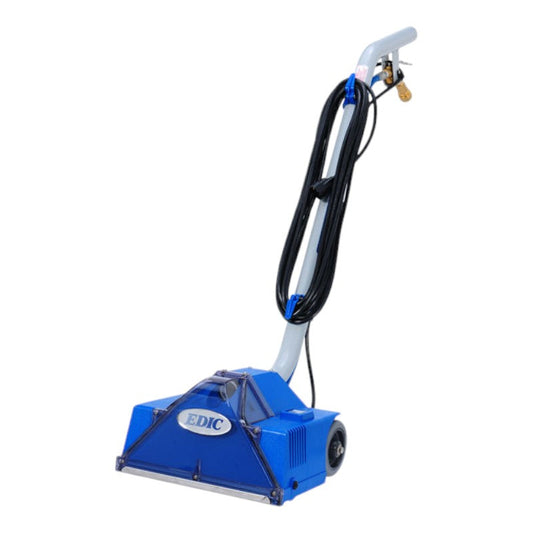
EDIC 1204ACH PowerMate Powered Carpet Wand
Regular price $999.00 USDRegular priceUnit price per
Frequently Asked Questions
Connect the female quick disconnect fitting on the solution hose to the male quick disconnect fitting on the wand's solution line, ensuring it snaps securely into place. Then, attach the vacuum hose cuff to the vacuum intake port on the wand.
For effective cleaning and faster drying, use slow, consistent strokes. A common method is to perform one "wet" pass (holding the trigger) followed by two "dry" passes (releasing the trigger) over the same section to maximize water recovery. Overlap passes by a few inches to ensure even cleaning.
EDIC wands, such as the Triton and Glidemaster, are designed with features like winged heads to prevent overspray and precision-engineered jets for even solution distribution. The Triton series uses aircraft aluminum and a special UHMW plastic shoe for durability and easy gliding, reducing operator fatigue. The Powermate is a powered wand with a high-speed cylindrical brush that actively scrubs the carpet fibers for deeper cleaning.
Most EDIC wands feature an ergonomic or adjustable handle design, allowing you to find a comfortable height that minimizes back strain and allows for good posture during extended use.
Lack of spray is often due to a clogged spray tip, an empty solution tank, or a clogged in-line filter. First, check that the tank has enough solution and the filter is clean. If the jets are clogged, they must be removed and cleaned (see below). The pump may also need priming; refer to your extractor's manual for the priming procedure.
Remove the jets from the wand using a wrench. Soak them in a solution of calcium, lime, and rust remover or vinegar to dissolve mineral buildup. Use a soft brush to clean the tip, and flush the wand's internal line with water before reinstalling the jets. Do not use a pin or hard object to poke the jet hole, as this can damage the precision opening and ruin the spray pattern.