

Steam Cleaner vs Carpet Cleaner: The Definitive Comparison Guide
Many homeowners face confusion when deciding between steam cleaners and carpet cleaners for their flooring needs. Both machines promise deep cleaning results, but they work in completely different ways and serve distinct purposes.

Steam cleaners use hot water vapor to sanitize and clean surfaces, while carpet cleaners inject cleaning solution into fibers and extract dirty water for deeper soil removal. Steam cleaners rely on high-temperature steam to break down dirt and kill germs without chemicals.
Carpet cleaners combine water, detergent, and suction power to tackle embedded stains and ground-in debris. The choice between these machines depends on specific cleaning goals and carpet conditions.
Steam cleaning effectiveness varies depending on carpet type and the level of soiling present. Understanding how each system works helps homeowners select the right tool for maintaining clean, healthy carpets.
Key Takeaways
- Steam cleaners sanitize with hot vapor while carpet cleaners use solution injection and extraction
- Carpet cleaners excel at removing deep stains and embedded dirt from carpet fibers
- The best choice depends on whether sanitization or deep soil removal is the primary cleaning goal
Understanding Steam Cleaners and Carpet Cleaners

Steam cleaners use high-temperature vapor to sanitize and clean surfaces, while carpet cleaners rely on water, detergent, and suction to deep clean carpet fibers. These two cleaning methods work through completely different mechanisms and deliver distinct results.
What Is a Steam Cleaner?
A steam cleaner generates high-temperature vapor above 100°C to clean and sanitize surfaces. The device heats water in an internal boiler to create pressurized steam.
The steam kills bacteria, dust mites, and other microorganisms on contact. It also softens and loosens dirt and debris from carpet fibers.
Key Features:
- Uses only water (no detergents required)
- Produces dry vapor with less than 6% water content
- Allows carpets to dry within 15 minutes
- Temperature reaches over 212°F (100°C)
Dry steam cleaning effectively reduces house dust mite allergen concentration in carpets. The high temperature vapor penetrates carpet pile to eliminate allergens and contaminants.
Steam cleaners work best on surface-level dirt and for sanitizing purposes. They excel at killing germs but may not remove deeply embedded soil.
What Is a Carpet Cleaner?
A carpet cleaner uses hot water, cleaning solution, and powerful suction to deep clean carpet fibers. These machines inject heated water and detergent into carpet pile, then extract the dirty solution.
The cleaning process involves three main steps. First, the machine sprays hot water and detergent onto the carpet.
Second, brushes agitate the fibers to loosen dirt. Third, powerful suction removes the dirty water.
Main Components:
- Water reservoir for clean solution
- Separate tank for dirty water collection
- Heating element for hot water
- Brushes or scrubbing mechanism
- Strong suction motor
Carpet cleaners excel at removing deeply embedded dirt, stains, and odors. They use detergents specifically formulated to break down different types of soil and debris.
The extraction process removes both cleaning solution and dissolved dirt from carpet fibers. This method typically requires longer drying times than steam cleaning.
Key Differences in Cleaning Methods
Steam cleaning and carpet cleaning work through fundamentally different mechanisms and serve different cleaning purposes.
Steam Cleaning Process:
- Uses heat and moisture to sanitize
- No detergents or chemicals required
- Fast 15-minute drying time
- Kills germs and dust mites effectively
Carpet Cleaning Process:
- Uses detergent and hot water extraction
- Requires cleaning chemicals
- Longer drying time (6-24 hours)
- Removes embedded dirt and stains
Studies show both cleaning methods substantially reduce carpet contaminants, but with different effectiveness levels. Steam cleaning achieved 85.5% reduction in dust mite allergens, while regular vacuuming alone achieved 80.8% reduction.
Steam cleaners work best for regular maintenance and sanitizing. Carpet cleaners excel at deep cleaning heavily soiled carpets and removing stubborn stains.
Deep Cleaning Capabilities and Effectiveness
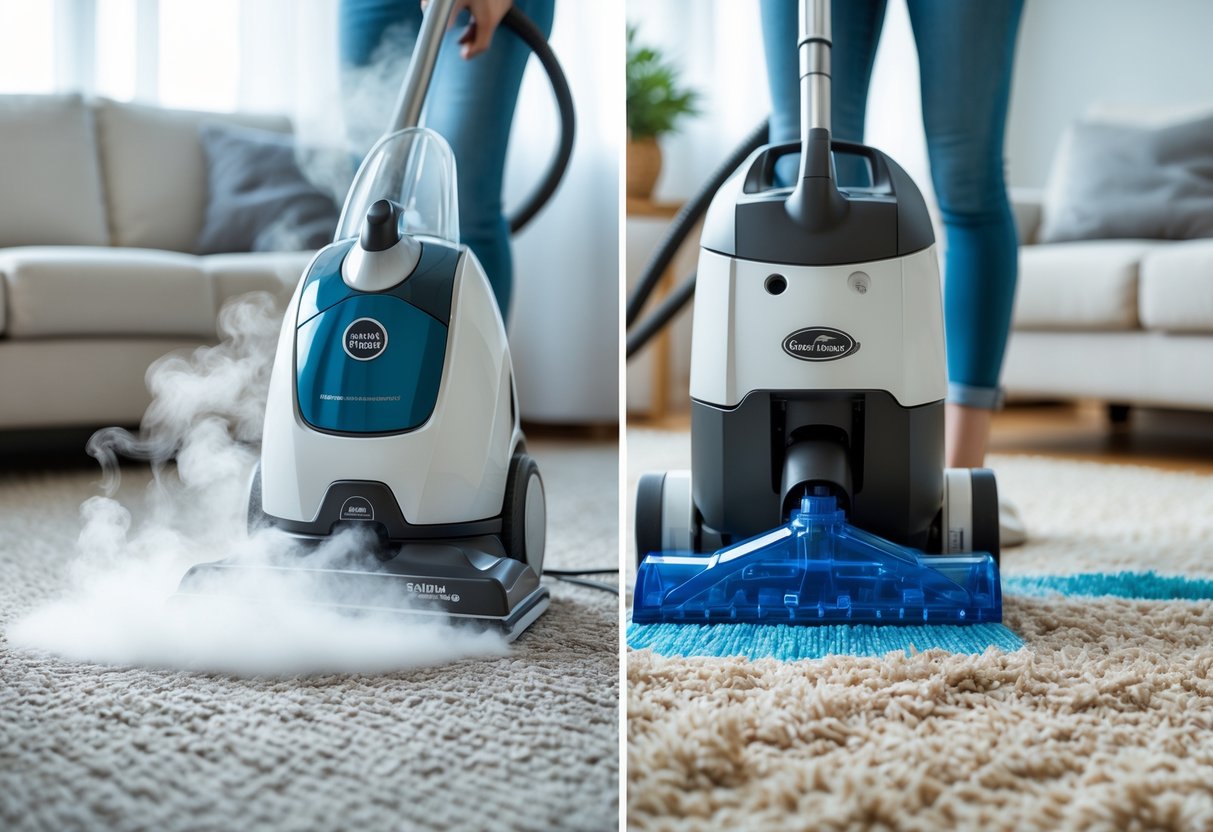
Steam cleaners excel at killing bacteria and dust mites through high-temperature vapor, while carpet cleaners focus on extracting embedded dirt and treating specific stains with specialized cleaning solutions.
Removing Dirt and Allergens
Steam cleaners penetrate carpet fibers using high-temperature vapor that reaches above 200°F. This heat loosens dirt particles and kills dust mites on contact.
The vapor softens sticky debris that regular vacuuming cannot remove. However, steam cleaners rely on towels or subsequent vacuuming to physically extract the loosened material.
Research shows that dry steam cleaning plus HEPA vacuuming reduces dust loading by 64.4% and allergens by 85.5%. This combination proves more effective than HEPA vacuuming alone.
Carpet cleaners use water extraction to pull dirt directly from carpet fibers. They inject cleaning solution deep into the carpet pile and immediately suction it back out along with dissolved dirt.
This mechanical extraction removes more embedded debris in a single pass. The cleaning solutions also break down allergen proteins that steam alone cannot eliminate.
Key Allergen Removal Comparison:
- Steam cleaners: Kill dust mites but require additional extraction
- Carpet cleaners: Remove allergen particles through direct suction
Handling Stubborn Stains
Carpet cleaners excel at treating specific stains through targeted cleaning solutions. They can apply pre-treatment chemicals that break down protein-based stains like blood or food spills.
The hot water extraction process dissolves and removes stain particles completely. Different cleaning formulas target specific stain types for maximum effectiveness.
Steam cleaners struggle with set-in stains because they only use water vapor. The high temperature may help loosen some stains, but without chemical action, many stubborn marks remain.
Steam cleaning limitations for stains:
- No chemical cleaning agents
- Cannot dissolve oil-based stains
- May set protein stains permanently
Pet accidents, wine spills, and grease marks require the chemical action that only carpet cleaners provide. Steam alone cannot break down complex stain molecules effectively.
Sanitization and Bacteria Elimination
Steam cleaners provide superior sanitization through high-temperature treatment. The vapor reaches temperatures that instantly kill bacteria, viruses, and other pathogens.
Steam cleaning effectively controls house dust mites and eliminates microscopic organisms that cause allergic reactions. This makes steam cleaning ideal for households with allergy sufferers.
The chemical-free sanitization process leaves no residue behind. This approach benefits families with young children who play on carpeted floors.
Carpet cleaners sanitize through cleaning solutions rather than heat. Some formulas include antimicrobial agents, but they cannot match the pathogen-killing power of high-temperature steam.
Sanitization effectiveness:
- Steam cleaners: Kill 99.9% of bacteria and viruses through heat
- Carpet cleaners: Reduce bacteria through chemical cleaning agents
The heat from steam cleaners penetrates deeper into carpet padding where moisture and bacteria often hide. Carpet cleaners focus primarily on surface-level sanitization.
Impact on Carpet Fibers and Material Safety
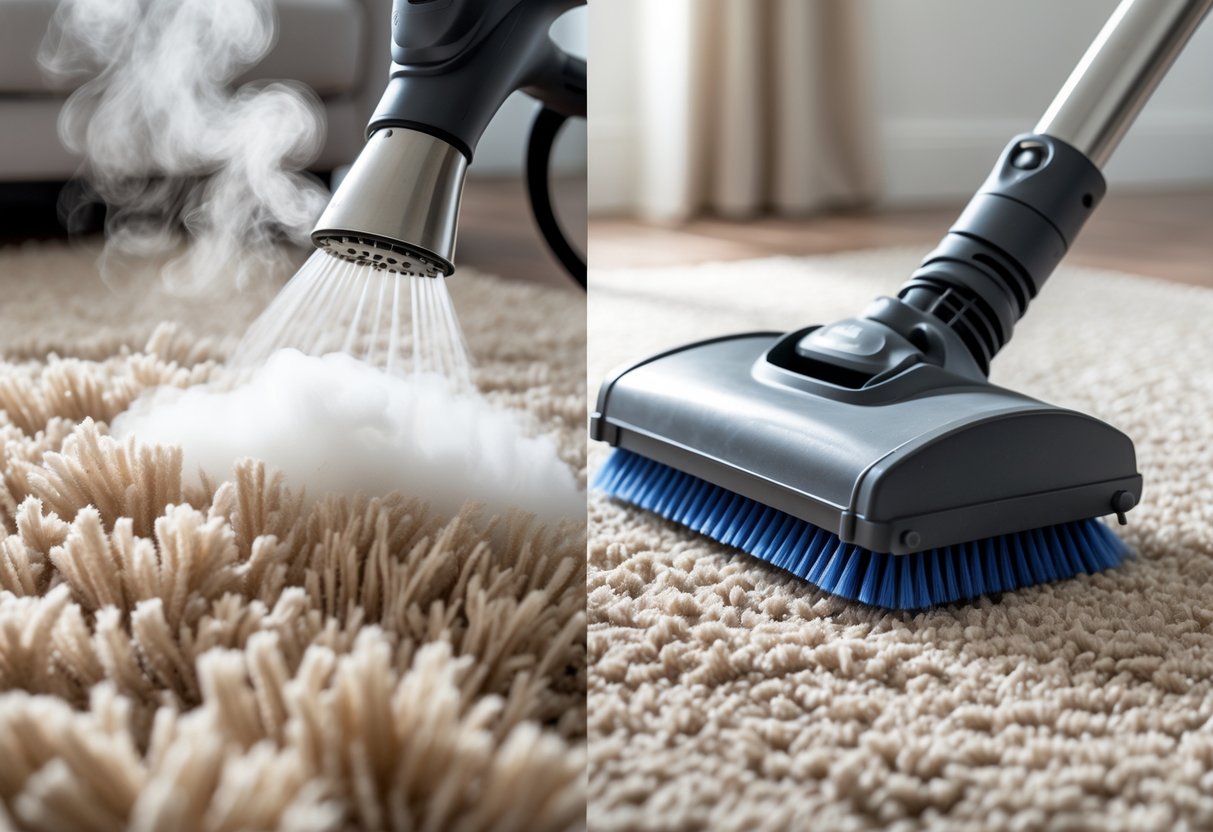
Steam cleaners and carpet cleaners affect different types of carpet fibers in unique ways, with each method posing specific risks to materials like wool, nylon, and polyester. Understanding these effects helps prevent permanent damage from heat exposure or chemical reactions.
Effects on Carpet Fibers
Steam cleaning uses high temperatures that can damage delicate carpet fibers. Natural fibers like wool are particularly vulnerable to heat damage and shrinkage.
The hot steam can cause wool fibers to contract and become matted. Synthetic carpet fibers such as nylon and polyester handle steam better than natural materials.
However, excessive heat can still cause adverse effects on thermoplastic carpet fibers, including melting or distortion. Traditional carpet cleaners use chemical solutions that work differently.
These cleaners can affect carpet color gradually or damage carpet fibers almost immediately depending on the chemical composition. Chemical cleaners may leave residues that attract dirt over time.
This creates a cycle where carpets get dirty faster after cleaning.
Suitability for Different Carpet Types
Natural Fiber Carpets:
- Wool carpets require gentle cleaning methods
- Steam cleaning should use lower temperatures
- Chemical cleaners need pH-neutral formulations
Synthetic Fiber Carpets:
- Nylon handles both steam and chemical cleaning well
- Polyester resists most cleaning chemicals
- Polypropylene works with high-temperature steam
Loop pile carpets trap dirt deeper and benefit from steam's penetrating heat. Cut pile carpets clean effectively with either method but show water marks more easily with steam cleaning.
Berber carpets with tight weaves need careful attention. Too much moisture from either cleaning method can cause backing separation.
Risk of Damage and Overuse
Over-wetting represents the biggest risk with both cleaning methods. Excessive moisture can damage carpet backing and create mold growth underneath.
Steam cleaning risks include burns from hot surfaces and potential shrinkage of natural fibers. Multiple steam cleaning sessions without proper drying time can weaken carpet fibers.
Chemical carpet cleaners pose different risks. Overuse symptoms include:
- Color fading or bleaching
- Fiber brittleness
- Residue buildup
- Allergic reactions from harsh chemicals
Both methods require proper ventilation during use. Cleaning worker stability can be affected by wet carpet surfaces, creating safety hazards.
Frequency matters significantly. Professional cleaning should occur every 12-18 months maximum to prevent fiber damage from repeated exposure to heat or chemicals.
Cleaning Solutions and Environmental Considerations
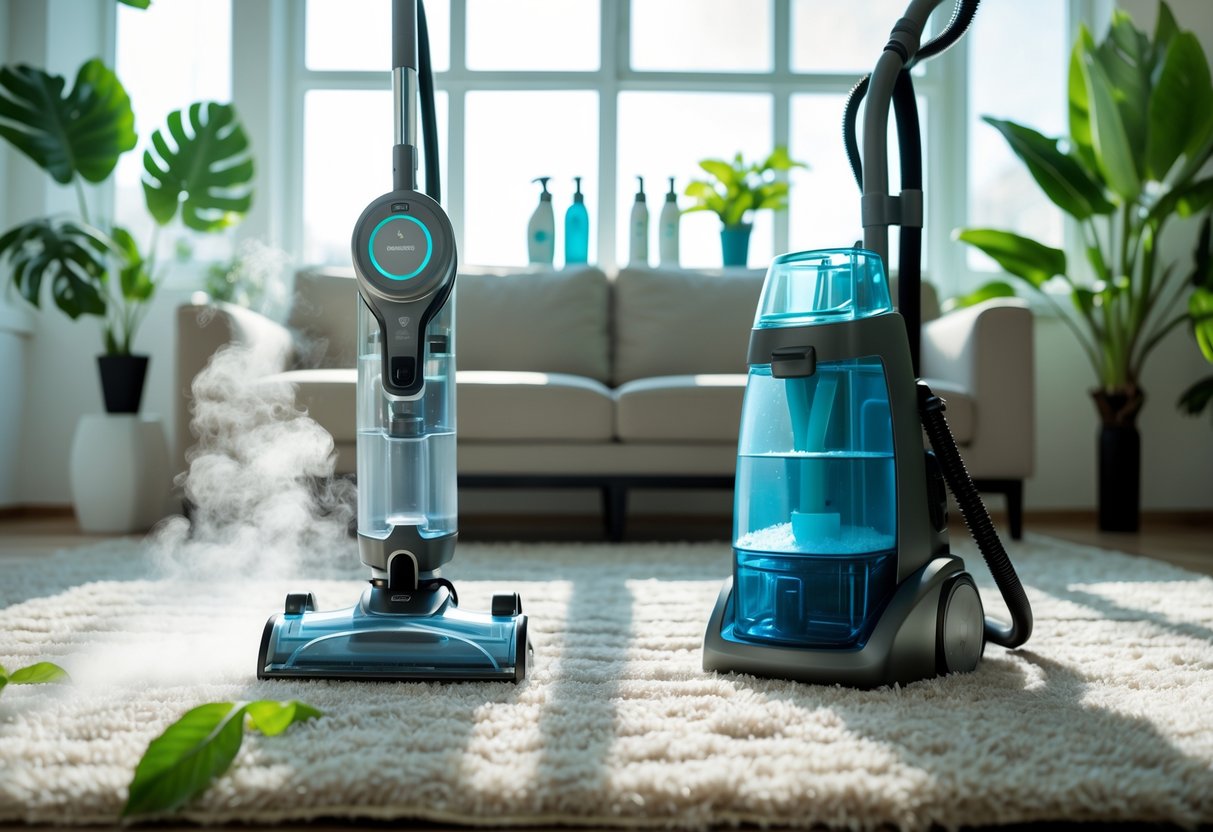
Steam cleaners use only water and heat to sanitize surfaces, while carpet cleaners require detergent solutions and chemical additives. These differences affect safety, environmental impact, and cleaning residue left behind.
Use of Cleaning Solution and Chemicals
Carpet cleaners depend on specialized detergents and chemical solutions to break down dirt and stains. These machines inject cleaning solutions deep into carpet fibers along with water.
Most carpet cleaning formulas contain surfactants, enzymes, and optical brighteners. Some include harsh chemicals like perchlorethylene or volatile organic compounds.
Steam cleaners operate differently. They use superheated water vapor reaching temperatures above 200°F.
The high heat kills bacteria and loosens dirt without any chemicals. Steam technology has proven effective against drug-resistant bacteria in hospital settings.
Eco-Friendliness and Chemical-Free Options
Steam cleaning offers significant environmental advantages. It eliminates the need for chemical cleaning products that can harm indoor air quality.
Traditional carpet cleaners release chemical vapors during and after use. These compounds can trigger allergies or respiratory issues in sensitive individuals.
Steam cleaning reduces water consumption by up to 90% compared to traditional methods. Hospital studies show steam technology uses only 3 liters of water versus 33 liters for chemical cleaning.
Chemical-free cleaning benefits:
- No toxic fumes or residues
- Safe for children and pets
- Reduced environmental impact
- Lower risk of allergic reactions
Drying Time and Residue
Carpet cleaners leave significant moisture and soap residue in carpet fibers. This combination creates longer drying times of 6-24 hours.
Soap residue acts like a dirt magnet. It attracts new soil quickly, causing carpets to look dirty sooner after cleaning.
Steam cleaning leaves minimal moisture since it uses less water. Carpets typically dry within 2-4 hours after steam treatment.
Steam cleaning produces no chemical residue. The cleaning process uses only water vapor that evaporates completely.
This prevents the sticky film that traditional carpet cleaners often leave behind. Quick drying reduces the risk of mold and mildew growth.
It also allows faster return to normal room use.
Professional Use and DIY Applications
Professional carpet cleaning services and home users approach steam and carpet cleaning with different needs and equipment capabilities. Professional cleaning requires more powerful tools and systematic methods, while DIY applications focus on convenience and ease of use.
Professional Carpet Cleaning Methods
Professional carpet cleaners use industrial-grade equipment that delivers superior cleaning power compared to consumer models. Their steam cleaners operate at higher temperatures and pressures, reaching deep into carpet fibers.
Commercial carpet cleaning machines feature larger water tanks and stronger suction systems. These tools handle heavy-duty cleaning jobs in offices, hotels, and large residential properties.
Professional equipment advantages:
- Higher heat output (above 200°F)
- Stronger vacuum suction
- Larger cleaning capacity
- Faster drying times
Professional services combine multiple cleaning methods for optimal results. They often use pre-treatment chemicals followed by hot water extraction or steam cleaning.
Steam cleaning devices used professionally can clean floors and various surfaces beyond just carpets. This versatility makes them valuable for commercial cleaning operations.
Home Use and Convenience
Home users prioritize easy setup and storage over maximum cleaning power. Consumer steam cleaners and carpet cleaners are designed for quick spot cleaning and regular maintenance.
DIY carpet cleaners typically weigh less and feature simpler controls. Many models come with attachments for stairs, upholstery, and tight spaces.
Home user benefits:
- Lightweight and portable
- Easy water tank refilling
- Simple one-button operation
- Compact storage design
Consumer steam cleaners work well for regular cleaning but may struggle with heavily soiled carpets. They require multiple passes over stained areas to achieve professional-level results.
Most home carpet cleaners use lower water temperatures than professional equipment. This makes them safer for DIY use but reduces their cleaning effectiveness on tough stains.
Cost Effectiveness
Professional carpet cleaning services charge $25-50 per room but provide deep cleaning that extends carpet life. This service works best for annual or bi-annual deep cleaning sessions.
Purchasing a home carpet cleaner costs $100-300 upfront. Regular users save money over time compared to hiring professionals multiple times per year.
Cost comparison factors:
- Professional service: $150-400 for whole house cleaning
- Home machine purchase: $100-300 one-time cost
- Cleaning solutions: $10-20 per cleaning session
- Maintenance costs: Minimal for both options
DIY cleaning becomes more cost-effective for families who clean carpets monthly or deal with frequent spills and pet accidents. Professional services make sense for annual deep cleaning or when carpets need restoration.
Home machines require ongoing purchases of cleaning solutions and occasional part replacements. Professional services include all materials and equipment in their pricing.
Choosing Between Steam Cleaner and Carpet Cleaner
The decision between a steam cleaner and carpet cleaner depends on your specific cleaning needs, maintenance preferences, and budget considerations. Steam cleaners excel at sanitizing and removing allergens, while carpet cleaners focus on deep cleaning stains and embedded dirt.
Deciding Based on Cleaning Needs
High-traffic households with pets or children benefit most from carpet cleaners. These machines remove deep stains, pet odors, and ground-in dirt that accumulates over time.
Steam cleaners work better for homes focused on sanitization and allergen control. Research shows that dry steam cleaning reduces dust mite allergens by 85.5%, making them ideal for allergy sufferers.
Stain removal capabilities differ significantly:
- Carpet cleaners: Wine, coffee, pet accidents, food spills
- Steam cleaners: Surface dirt, bacteria, dust mites, light stains
Homes with multiple carpet types should consider carpet cleaners. These machines handle both low-pile and high-pile carpets effectively with adjustable settings.
Steam cleaners suit homes prioritizing chemical-free cleaning. They use only water and heat, avoiding detergents that some family members might react to.
Maintenance and Long-Term Care
Carpet cleaner maintenance requires more attention. Users must clean solution tanks, rinse water lines, and replace filters regularly to prevent mold growth.
Steam cleaner upkeep involves simpler tasks. Empty the water tank after use and descale monthly in hard water areas.
Operating costs vary considerably:
| Machine Type | Water Usage | Solution Cost | Filter Replacement |
|---|---|---|---|
| Carpet Cleaner | High | $15-25/month | $20-40/year |
| Steam Cleaner | Low | None | Minimal |
Storage requirements differ between models. Carpet cleaners need space for the machine plus cleaning solutions. Steam cleaners require only the unit itself.
Frequency of use affects long-term value. Carpet cleaners justify their cost when used monthly or more. Steam cleaners provide better value for weekly sanitizing routines.
Recommendations for Different Users
Families with young children should choose steam cleaners for regular sanitization. The chemical-free cleaning eliminates concerns about residue on play surfaces.
Pet owners need carpet cleaners for effective odor and stain removal. Enzymatic cleaning solutions specifically target pet-related messes that steam alone cannot eliminate.
Allergy sufferers benefit from steam cleaners that kill dust mites with high temperature vapor above 100°C. The heat eliminates allergens without introducing new irritants.
Rental property owners should invest in carpet cleaners. These machines handle tenant turnover cleaning and maintain property value through deep stain removal.
Elderly users may prefer steam cleaners for their lighter weight and simpler operation. No mixing solutions or heavy lifting of water tanks.
Budget-conscious buyers should consider steam cleaners for lower operating costs and multipurpose cleaning capabilities beyond carpets.
Frequently Asked Questions
Steam cleaners use hot water vapor to sanitize surfaces, while carpet cleaners use water and cleaning solutions to extract dirt from deep carpet fibers.
Both machines offer distinct advantages depending on the cleaning task and carpet type.
What are the key differences between steam cleaners and carpet cleaners?
Steam cleaners heat water to create vapor that reaches temperatures between 200-300 degrees Fahrenheit. This hot steam kills bacteria and dust mites without using chemicals.
Carpet cleaners spray water mixed with cleaning solution into carpet fibers. They then extract the dirty water using powerful suction.
Steam cleaners work best on hard surfaces like tile, hardwood, and sealed floors. Carpet cleaners focus specifically on deep cleaning carpets and upholstery.
The cleaning process differs significantly between the two machines. Steam cleaners rely on heat for sanitization, while carpet cleaners use mechanical action and suction for dirt removal.
What are the pros and cons of using a steam cleaner versus a carpet cleaner?
Steam cleaners kill germs and bacteria effectively without harsh chemicals. They work well for people with allergies or chemical sensitivities.
However, steam cleaners may not remove deep-set stains or heavy soil buildup in carpets. The moisture can also damage certain carpet types or cause mold if not dried properly.
Carpet cleaners excel at removing dirt, stains, and odors from carpet fibers. Research shows that intensive vacuum cleaning combined with steam cleaning adds modestly to cleaning effectiveness.
Carpet cleaners require cleaning solutions and take longer to dry completely. They also cost more to operate due to solution expenses and water usage.
Is a steam cleaner or carpet cleaner more effective for cleaning couches?
Steam cleaners work better for sanitizing fabric couches and killing dust mites. The hot vapor penetrates fabric without over-wetting the cushions.
Carpet cleaners handle heavy stains and ground-in dirt more effectively on upholstery. They extract more moisture and debris from couch fabrics.
The fabric type determines which cleaner works best. Delicate fabrics respond better to steam cleaning, while durable fabrics can handle carpet cleaner extraction.
Always check the furniture manufacturer's cleaning recommendations before using either machine. Some fabrics require professional cleaning only.
What are some of the best steam cleaners available for carpet cleaning?
Commercial-grade steam cleaners offer the highest temperatures and most consistent vapor production. Commercial vapor steam cleaners can be expensive, but they provide superior cleaning power.
Units with larger water tanks require fewer refills during cleaning sessions. Look for models with at least 1.5-liter capacity for whole-room cleaning.
Steam cleaners with multiple attachments handle different surfaces and carpet pile heights. Floor tools, upholstery brushes, and crevice tools increase versatility.
Models with adjustable steam settings allow users to customize heat levels for different carpet materials. This prevents damage to sensitive fibers.
Can steam cleaners be used on all types of carpets, and are they as effective as professional carpet steam cleaning services?
Steam cleaners work safely on synthetic carpets like nylon and polyester. Natural fiber carpets such as wool may shrink or get damaged from high heat.
Berber and loop pile carpets can snag on steam cleaner attachments. Low-pile carpets respond better to steam cleaning than thick, plush carpets.
Professional services use truck-mounted equipment with higher temperatures and stronger suction. They achieve deeper cleaning than portable home units.
Steam cleaning or extraction is the preferable way to clean carpets. Professional equipment delivers better results than consumer models.
What are some of the potential drawbacks of using steam cleaning on carpets?
Steam cleaning can oversaturate carpets if used incorrectly. Excess moisture leads to mold growth and carpet backing damage.
The high heat may cause carpet colors to fade or bleed. Dark carpets show water spots more easily after steam cleaning.
Drying time increases significantly in humid conditions. Poor ventilation can extend drying from 6 hours to 24 hours or more.
Steam alone cannot remove oily stains or heavily embedded dirt. These require pre-treatment with cleaning solutions before steam application.
Some carpet warranties become void if homeowners use steam cleaners. Manufacturers may require professional cleaning to maintain coverage.
About The Author
Samson Goitom, founder of TopCleaningEquipment.com, is an accomplished e-commerce entrepreneur recognized for raising standards within the commercial cleaning equipment industry. Guided by a commitment to meaningful innovation and real-world impact, Samson built his platform around a clear mission: delivering reliable, high-performance cleaning solutions that truly enhance how people maintain their environments.
Leveraging years of hands-on industry experience, deep product expertise, and a strong focus on customer needs, Samson brings a research-driven, quality-first approach to every recommendation and resource on TopCleaningEquipment.com. His dedication to promoting healthier spaces, sustainable practices, and dependable equipment continues to drive the company’s vision—ensuring readers receive credible, practical insights for their cleaning and facility-care challenges.